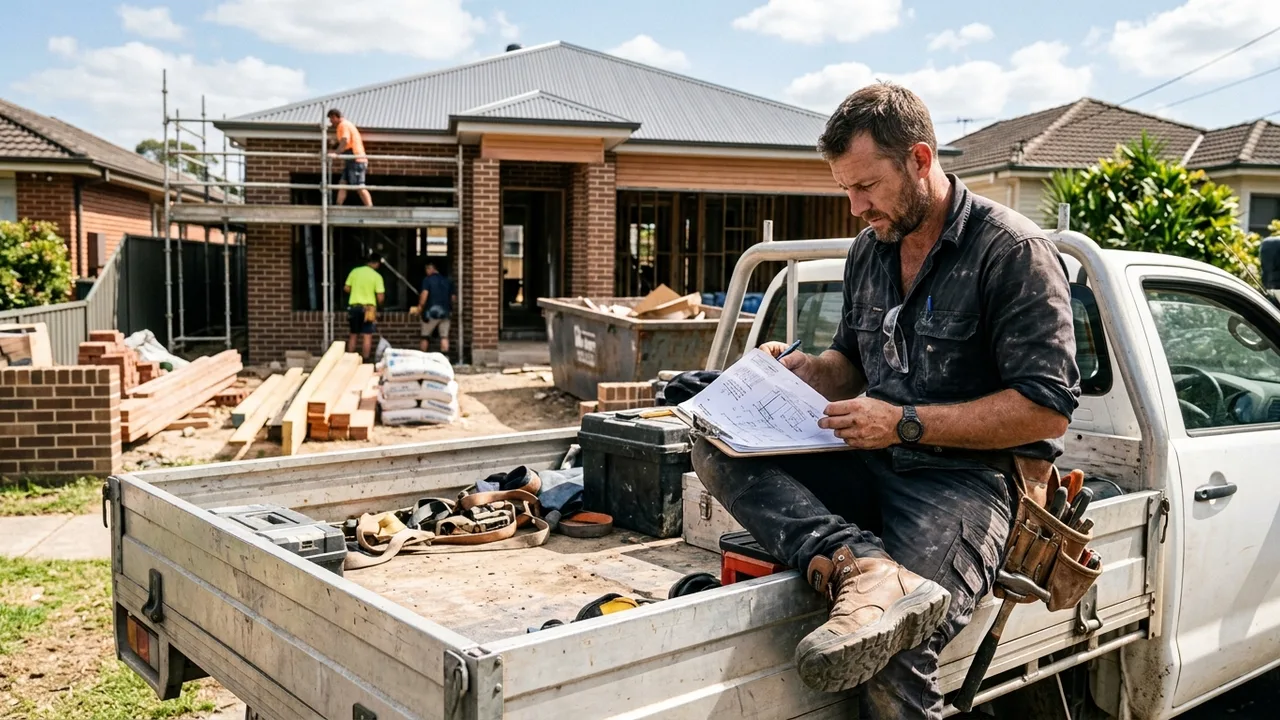
If you have looked into buying commercial property through your self-managed super fund, you will have run into two pieces of jargon almost immediately: the LRBA and the bare trust. They sound complicated, and the language does them no favours, but the underlying idea is straightforward once someone explains it plainly.
This is worth understanding properly, because since 10 August 2026, when new borrowing to buy residential property inside super was banned, commercial and business real property is the main remaining pathway for borrowing inside an SMSF. So if you are a business owner thinking about owning your premises through super, this is the structure you will be using. Here is how all the pieces fit together.
This article is general information only and does not take your personal circumstances into account. SMSF borrowing is tightly regulated. You should get licensed financial, tax and legal advice before acting.
Start with the problem the structure solves
Superannuation law generally prohibits a super fund from borrowing. That rule exists to protect retirement savings from being geared up and put at risk. But an outright ban on borrowing would stop funds acquiring property they could otherwise afford over time, so the law carves out a specific, tightly controlled exception. That exception is the limited recourse borrowing arrangement, and the bare trust is the vehicle that makes it work.
Everything that follows is really just the machinery built to let a fund borrow safely, without exposing the rest of your retirement savings to the loan.
The LRBA: what it is
LRBA stands for limited recourse borrowing arrangement. It is the structure, permitted under section 67A of the Superannuation Industry (Supervision) Act, that allows an SMSF to borrow to buy a single asset.
The two words that matter most are limited recourse. On an ordinary loan, if you default, the lender can pursue all of your assets. Under an LRBA, if the loan defaults, the lender’s recourse is limited to the one property bought with that loan. Your fund’s other assets, its cash, shares and any other property, are quarantined and cannot be touched. That protection is the entire point of the structure, and it is why these loans are treated so carefully by lenders and regulators alike.
The bare trust: what it is and why it exists
Here is the part that confuses people. Because of how the law is written, the SMSF cannot hold a property directly while there is a loan attached to it. So a separate trust, called a bare trust or holding trust, is created to hold the legal title to the property while the loan is being repaid.
The key thing to understand is the split between legal and beneficial ownership:
- The bare trust holds the legal title. On paper, the property is registered in the name of the bare trustee, typically a company set up specifically for this one purpose.
- Your SMSF is the beneficial owner. From day one, your fund receives all the rent, benefits from any capital growth, and makes all the decisions. It has all the upside of ownership.
The bare trustee is deliberately passive. It has no discretion and no active role. It simply holds the title and does what the SMSF trustee directs. When the loan is fully repaid, the bare trust has served its purpose, and legal title transfers from the bare trustee to the SMSF. The fund then owns the property outright, often by which time it may be moving toward or into pension phase, where its tax treatment is more favourable again.
Most advisers recommend using a company as the bare trustee rather than an individual, because a company has perpetual existence. If an individual bare trustee dies or loses capacity partway through the loan, transferring the property becomes complicated and expensive. A dedicated trustee company avoids that.

How the pieces work together: a simple example
Put concretely, a typical business premises purchase runs like this. Suppose a business owner’s SMSF is buying a commercial unit for $850,000.
- The SMSF borrows the funds under an LRBA, contributing a deposit from its existing balance and borrowing the rest from a specialist lender.
- A new company is established as the bare trustee, holding legal title to the unit.
- The owner’s business leases the premises back from the SMSF at genuine market rent, on a proper arm’s length lease.
- The business pays rent to the SMSF, which combines it with the members’ super contributions to meet the loan repayments.
- Once the loan is repaid, legal title passes from the bare trustee to the SMSF, which now owns the property outright inside a low-tax environment.
The rent that would once have gone to a landlord has instead paid down an asset the fund owns. That is the whole appeal of the strategy, and the LRBA and bare trust are simply the compliant plumbing that makes it possible.
The rules that keep it compliant
This structure is legitimate and well established, but it is unforgiving of errors. A few rules must be observed strictly.
One arrangement, one asset
Each LRBA and bare trust can hold only a single acquirable asset. If you want to buy a second property, you need a second LRBA and a second bare trust, each with its own deed, its own trustee company and its own loan. You cannot bundle multiple properties under one arrangement.
Order matters, more than anything else
This is the single most common and most expensive mistake. The bare trust must exist, and the contract must be signed correctly in the name of the bare trustee, before settlement. Buying the property first and trying to bolt the structure on afterwards can cause the whole arrangement to fail, and can trigger double stamp duty because the transaction is treated as two separate transfers. The sequencing is not a formality. Get it wrong and the cost is severe.
No improvements with borrowed money
Under section 67B, borrowed funds can be used to maintain or repair the asset, but not to improve it in a way that changes its character. You can replace a failed air-conditioning unit. You cannot use loan funds to add a new floor or fundamentally transform the building. Improvements that change the character of the asset must be funded from the fund’s own cash, not the borrowing.
Genuine arm’s length terms
Where the property is leased back to your own business, the lease must be at market rent and properly documented, and the rent must actually be paid on time. Where any part of the borrowing comes from a related party rather than a commercial lender, the loan terms must also be arm’s length. The ATO publishes safe harbour terms for related-party LRBA loans in its guidance, PCG 2016/5, which are a practical way to stay onside.
Annual audit
Every year your fund’s registered SMSF auditor must review and verify the LRBA, checking the bare trust deed, confirming the loan terms comply, verifying repayments, and confirming no prohibited improvements have been made. Poor documentation is itself a reportable breach, so keeping clean records from the outset is not optional.
Why this needs a team, and where a broker fits
Setting up an LRBA correctly involves several professionals working in sequence: your accountant and financial adviser on whether the strategy suits your fund, a lawyer to draft the bare trust deed correctly for SMSF purposes, the lender for the borrowing, and a broker to structure and place the loan. A generic bare trust deed not drafted specifically for an SMSF LRBA is a frequent source of problems, which is why the legal side matters.
My role sits on the lending side of that team. Only a small number of specialist and non-bank lenders write SMSF commercial loans, since most major banks have stepped back, and their policies vary widely on loan-to-value ratios, rates and fund requirements. Getting the loan matched to the right lender, and sequenced correctly alongside the bare trust, is where a broker who knows this space earns their place on the team.
Frequently asked questions
Can my SMSF still use an LRBA after the August 2026 changes? Yes, for commercial and business real property. The ban applies only to new borrowing for residential investment property. Commercial LRBAs are unaffected.
What is the difference between the bare trust and my SMSF? The bare trust holds the legal title to the property while the loan is being repaid. Your SMSF is the beneficial owner throughout, receiving the rent and the growth. Once the loan is repaid, title transfers to the fund.
Why can’t my SMSF just hold the property directly? Super law does not permit the fund to hold an asset with a loan attached to it directly. The bare trust is the structure that makes borrowing possible while keeping the fund compliant.
Can I buy two properties under one LRBA? No. Each LRBA and bare trust can hold only a single acquirable asset. A second property requires a separate LRBA and a separate bare trust.
What happens if the structure is set up in the wrong order? It can cause the arrangement to fail and may trigger double stamp duty. The bare trust must be established and the contract signed correctly before settlement. This sequencing is critical.
Where to from here
The LRBA and the bare trust sound intimidating, but the logic is simple: the law lets your super borrow to buy one asset, held safely in a separate trust, with the rest of your fund protected if anything goes wrong. Understood that way, it is a powerful and entirely legitimate way for a business owner to own their premises through super. It just has to be built in the right order, by the right people.
SMSF lending is the work I know best, and I work alongside good accountants and SMSF lawyers to get these arrangements structured cleanly. If you are weighing up a commercial purchase inside your super, I can tell you whether it stacks up, what the current lender panel will accept, and how to sequence it so nothing goes wrong.
To talk through an SMSF commercial property purchase, get in touch with UniFi Capital.